
What Is an EMP Surge Protector?
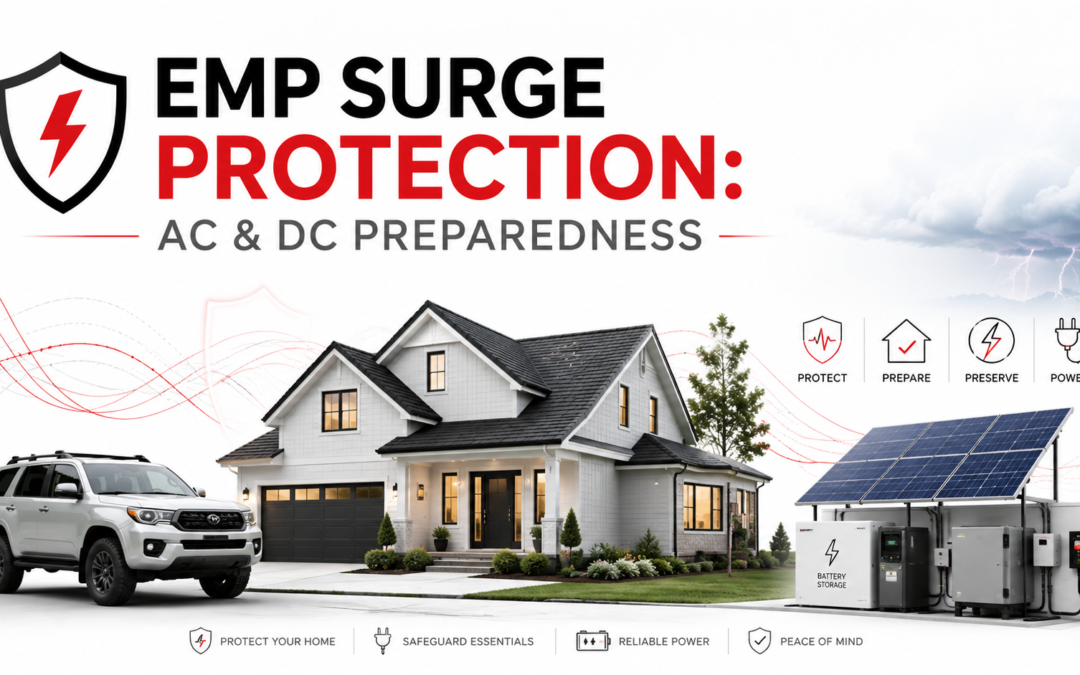
An EMP surge protector is a surge protection device used to help limit damaging voltage transients that may enter electrical or electronic equipment through connected wiring. For homeowners and preppers, the goal is not to create fear or make unrealistic promises. The goal is to better understand how electromagnetic energy can affect wiring, electronics, AC power systems, and DC systems such as vehicles, batteries, solar equipment, RVs, and marine electronics.
Bad Wolf’s goal with this article is to provide practical information without hype. EMP events, lightning, utility surges, solar storms, and wiring-related transients are different types of electrical threats. No single device can guarantee complete protection from every possible event. The practical goal is to reduce risk by protecting the AC and DC systems homeowners and preppers are most likely to depend on.
For a home, that usually means protecting the 120/240V split-phase AC electrical system. For preparedness, it may also mean protecting important 12V DC systems such as vehicles, radios, battery-powered equipment, and backup power systems.
Electromagnetic Energy Is All Around Us
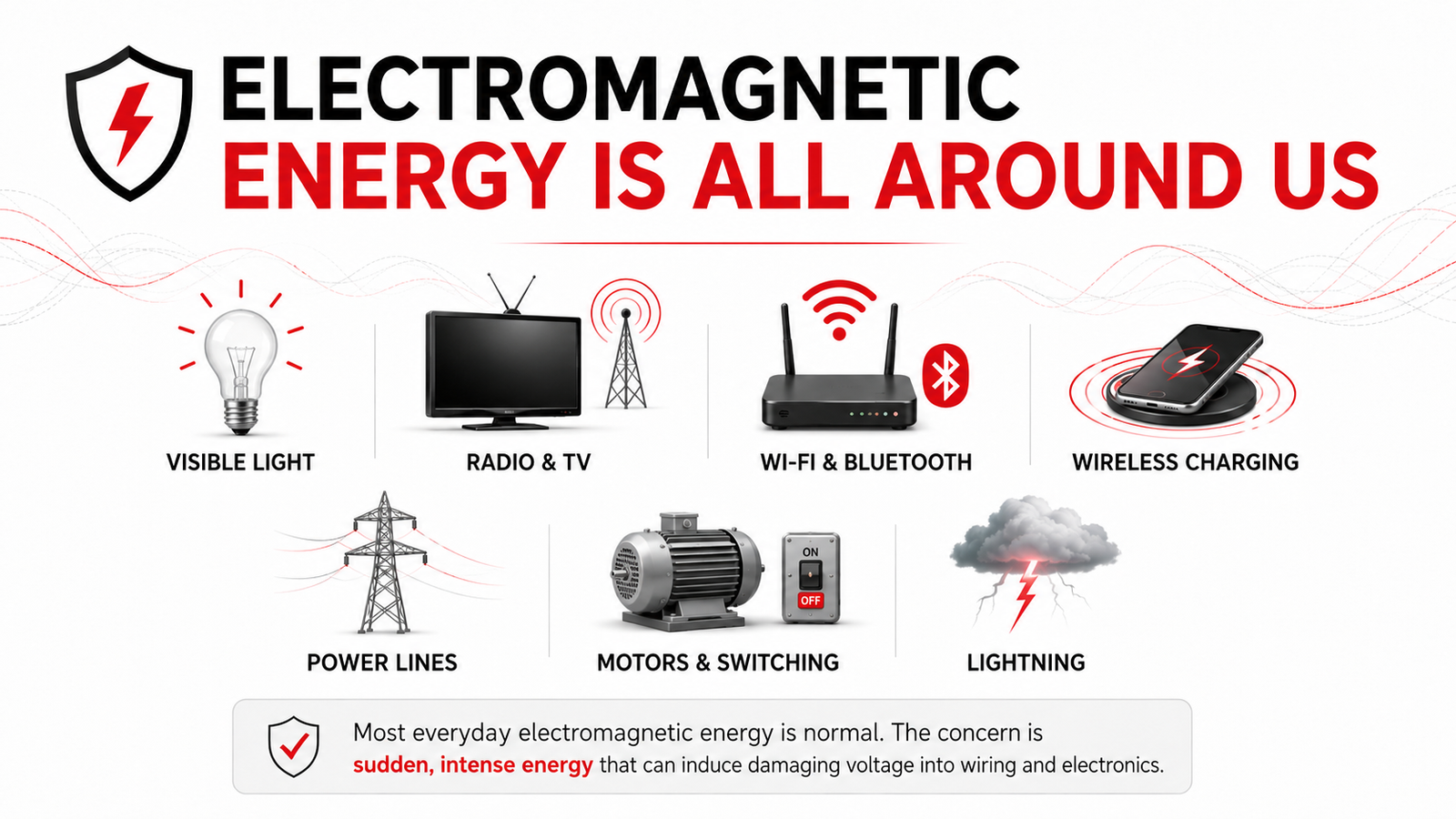
Electromagnetic energy is not unusual. It is part of everyday life. Visible light is a form of electromagnetic radiation. Radio and TV signals, Wi-Fi, Bluetooth, wireless chargers, cell phone signals, power lines, motors, switches, and lightning all involve electromagnetic fields, electromagnetic waves, or electromagnetic radiation in some form.
Most everyday electromagnetic energy is normal and does not damage electronics. The concern with an EMP is different. An electromagnetic pulse is a sudden burst of electromagnetic energy that may induce unwanted voltage and current into wiring, antennas, conductors, and electronic circuits.
That distinction is important. This article is not intended to hype fear or suggest that every electromagnetic field is dangerous. Instead, it is meant to explain how sudden, intense electromagnetic energy can become a problem when it couples into the wiring connected to important equipment.
A Simple Way to Understand EMP Effects
Most people have already experienced a small example of electromagnetic interference without realizing it. If you have ever been on a phone call during a thunderstorm and heard a burst of static when lightning struck nearby, or if you have ever heard crackling static on a radio during a storm, you have heard the effects of electromagnetic energy interfering with electronics.
Lightning creates a powerful electromagnetic pulse as current rapidly moves through the air. That pulse can radiate outward and couple into nearby wiring, antennas, communication lines, and electronic circuits. In many cases, the result is only a brief static noise. In stronger events, or when the energy couples into power wiring or sensitive equipment, the result can be damaging voltage and current.
This does not mean every lightning event is the same as a nuclear EMP or a geomagnetic storm. The point is simpler: electromagnetic energy can travel through the air, couple into conductors, and affect electronics. That is why wiring, grounding, bonding, equipment layout, and surge protection all matter when discussing EMP preparedness.
How an EMP Can Affect Wiring
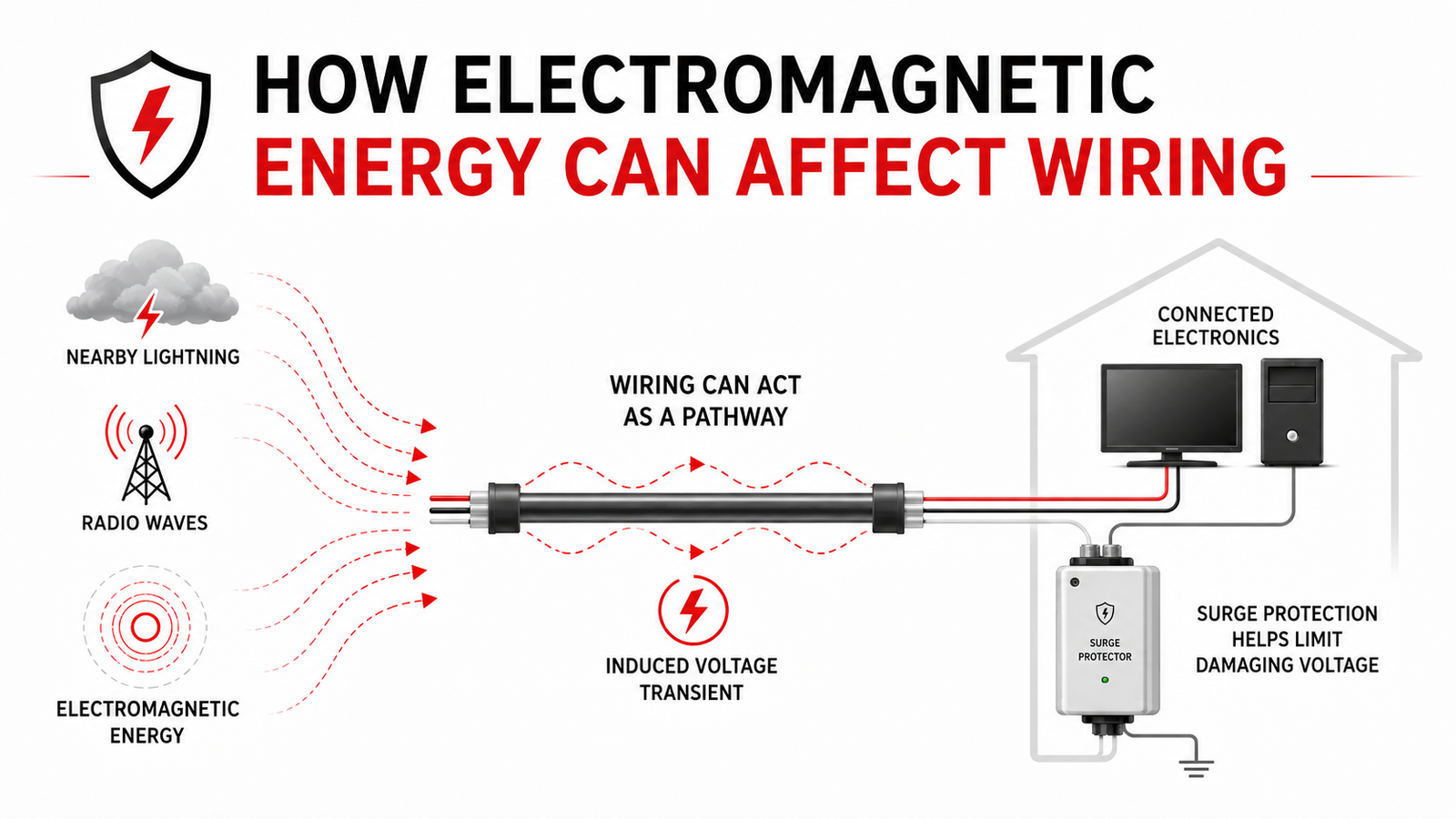
An electromagnetic pulse does not need to physically touch a device to create a problem. A fast-changing electromagnetic field can induce voltage and current into conductive paths. Long wires, power lines, antenna cables, solar PV conductors, vehicle wiring, RV wiring, marine wiring, and low-voltage control wiring can all act as pathways for unwanted energy.
Once a voltage transient is induced onto wiring, it can travel into connected electronics, power supplies, control boards, chargers, inverters, radios, sensors, and other equipment. This is one reason surge protection is important: it helps limit damaging voltage before it reaches sensitive electronics.
EMP, Lightning, Solar Storms, and GMD: What Is the Difference?
The term EMP is often used broadly, but not every electromagnetic event is the same. Lightning, nuclear EMP, solar storms, and geomagnetic disturbances can all involve electromagnetic energy, but they affect systems in different ways.
Lightning is a local, high-energy event. A direct strike can be extremely destructive, but even nearby lightning can create electromagnetic interference and voltage transients on wiring.
Nuclear EMP, sometimes called HEMP when produced by a high-altitude nuclear event, is commonly discussed in terms of multiple pulse components. The fast component is often associated with rapid stress on electronics, while slower components may affect longer conductors and larger electrical systems.
Solar storms and geomagnetic disturbances are different from a fast EMP. They are generally associated with longer-duration effects that can impact large electrical systems, long conductors, and grid infrastructure.
The Carrington Event
One of the best-known examples of an extreme solar storm is the Carrington Event of 1859. During that event, powerful solar activity caused widespread auroras and disrupted telegraph systems. Some telegraph operators reported sparks, shocks, and equipment continuing to operate even after batteries were disconnected. The Carrington Event is often used as a historical example of how solar activity can affect electrical and communication systems on Earth.
Miyake Events
Miyake events are different because they were not directly observed as modern electrical failures. Instead, they are extreme cosmic radiation events identified through sudden increases in carbon-14 found in tree rings and other natural records. These events help scientists study the possibility of very large solar or space-weather events that occurred before modern electrical infrastructure existed.
What Could Happen If a Major Space-Weather Event Happened Today?
If a Carrington-level solar storm or a much larger Miyake-type radiation event occurred today, the effects could be more serious than they were in the past because modern life depends heavily on electrical infrastructure, electronics, communications, vehicles, solar equipment, and battery systems.
A severe geomagnetic storm could induce unwanted current into long conductors such as transmission lines, utility infrastructure, pipelines, communication lines, and other large electrical systems. This could stress transformers, protective equipment, grid controls, and other parts of the power system. In a worst-case scenario, some areas could experience voltage instability, equipment damage, outages, or extended recovery times depending on the severity of the event and the condition of the grid.
Smaller electrical and electronic systems could also be affected indirectly. Homes, vehicles, inverters, charge controllers, battery systems, radios, routers, control boards, and other electronics may be vulnerable if damaging voltage transients enter through connected wiring, antennas, power lines, solar conductors, or communication cables.
This does not mean every device would automatically fail, and it does not mean every solar storm would damage household electronics. The practical point is that modern systems are more connected and more electronics-dependent than they were in 1859. That is why grid resilience, proper grounding and bonding, surge protection, and layered protection for important AC and DC systems are worth considering.
The reason these events matter in a modern preparedness discussion is simple: today’s homes, vehicles, communications, solar equipment, battery systems, and grid infrastructure depend heavily on electronics. Historical and ancient space-weather evidence reminds us that electrical resilience is not only about everyday surges. It is also about reducing risk from rare but potentially disruptive events.
For homeowners and preppers, the practical takeaway is this: different events create different risks, but connected wiring is often part of the path that allows unwanted energy to reach equipment. That is why a layered protection plan should consider both AC power systems and important DC systems.
Can an EMP Surge Protector Help?
An EMP surge protector can help by limiting damaging voltage transients on the electrical conductors where it is installed. In simple terms, it gives unwanted surge energy a controlled path to be diverted or reduced before it reaches sensitive equipment.
That does not mean a surge protector creates an invisible shield around a home, vehicle, or electronic device. Protection depends on the size and type of event, the wiring layout, grounding, bonding, installation quality, and the equipment being protected.
This is why the most honest answer is that an EMP surge protector can be part of a layered protection plan. It should not be viewed as the only layer. Other important factors include proper grounding and bonding, shorter wiring runs where practical, quality installation, disconnecting nonessential equipment when appropriate, and protecting the circuits or systems that matter most.
For many homeowners and preppers, the most practical starting point is to protect the home’s 120/240V AC electrical system and then consider important 12V DC systems such as vehicles, radios, battery systems, and backup power equipment.
Why AC and DC Protection Both Matter
Many people think about surge protection only for the main electrical panel, but homeowners and preppers often depend on both AC and DC systems.
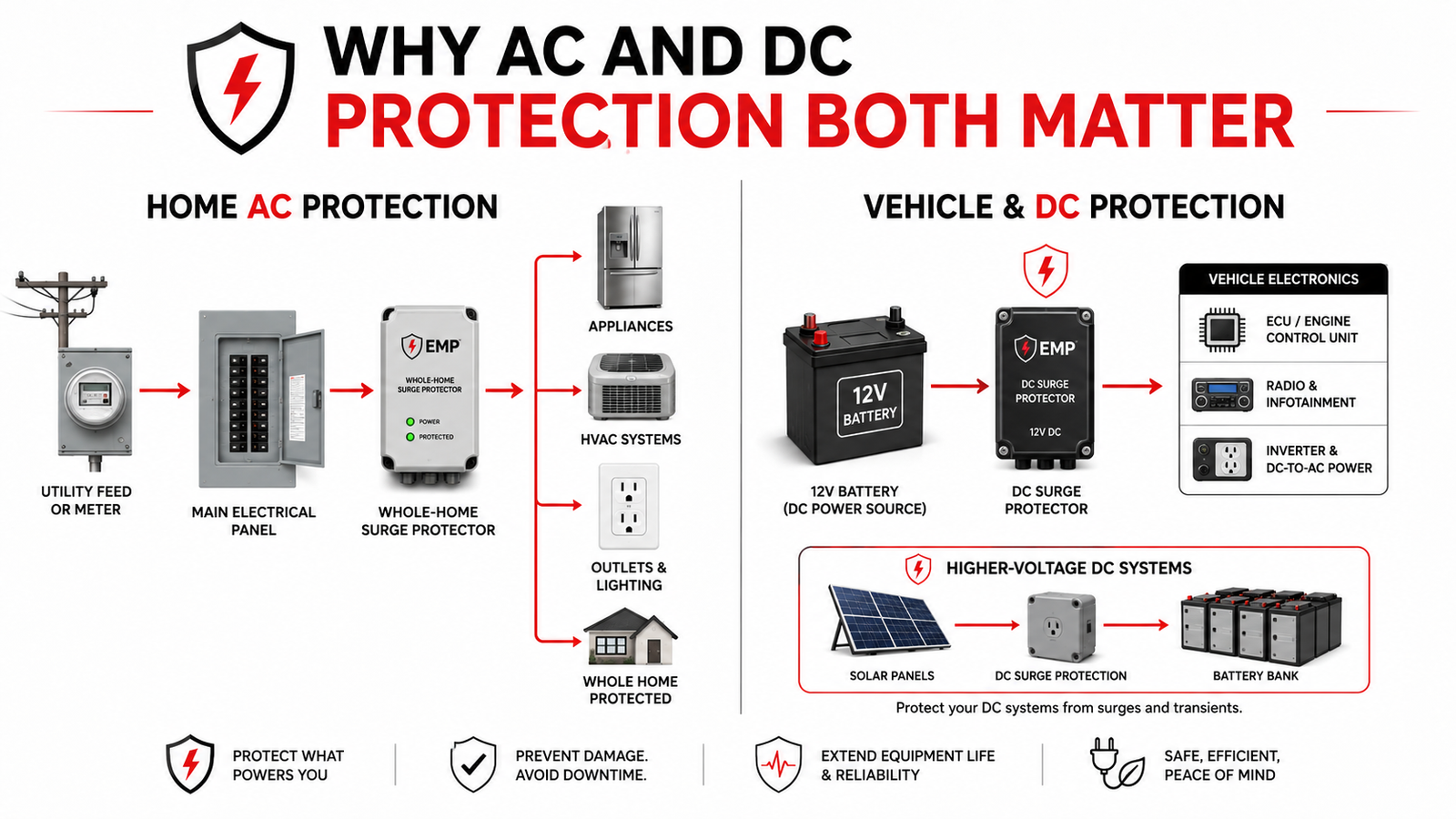
AC protection is important for the home’s 120/240V split-phase electrical system. This includes the main panel, major appliances, HVAC equipment, lighting, outlets, electronics, and other equipment connected to the home’s electrical system.
DC protection is important because many preparedness systems rely on DC power. Vehicles, 12V batteries, radios, solar equipment, charge controllers, battery banks, RV systems, marine electronics, and backup power equipment may all include sensitive DC electronics.
For a homeowner or prepper, the goal is not to choose between AC and DC protection. The better approach is to think about what systems you rely on most. Protecting the home’s AC system helps reduce risk to the house and connected equipment. Protecting important DC systems helps reduce risk to vehicles, backup systems, and equipment that may be needed during an outage or emergency.
What About Military EMP Standards?
You may see some companies mention military standards when discussing EMP protection. Those standards can be important in the right setting, but it is also important to understand what they are actually used for.
Many military EMP-related standards are written for equipment testing, military platforms, hardened facilities, or mission-critical infrastructure. They are not always consumer surge protector product standards in the same way that residential and commercial surge protective devices are commonly evaluated for electrical surge protection applications.
For homeowners and preppers, the more practical question is not whether a product name includes a military acronym. The better question is whether the protection approach makes sense for the system being protected. Is the device installed on the right conductors? Is the system properly grounded and bonded? Is the wiring layout reasonable? Is protection being considered for both AC and DC systems?
At Bad Wolf, we believe EMP surge protection should be discussed honestly. We do not believe in using scare tactics or confusing technical language to make unrealistic promises. Surge protection is a practical risk-reduction tool, not a guarantee that every device will survive every possible event.
Bad Wolf EMP Surge Protector Options
For homeowners and preppers who want to take a practical layered approach, Bad Wolf offers EMP surge protector options for both AC and DC applications.
For 120/240V Split-Phase AC Home Protection
For residential split-phase AC applications, Bad Wolf offers surge protection options designed for 120/240V electrical systems. These may be used to help protect the home’s AC electrical system when properly selected and installed according to the product instructions and applicable electrical code.
- SP240V225KA
- HSD240V
- SP240V400KA
- PHSD240V
For DC Applications, Vehicles, Solar, and Battery Systems
For DC applications, Bad Wolf offers EMP surge protector options for 12V vehicle systems, as well as higher-voltage DC systems such as solar equipment, battery banks, RV systems, marine electronics, and backup power applications.
- MEMP line
- 12VEMP250KA
- MAXEMP line
- MAXDC line
The right protection setup depends on the system, voltage, wiring, installation location, grounding, and the equipment being protected. For best results, always review the product specifications and installation instructions before selecting an EMP surge protector.
Final Thoughts: Practical Preparedness Without Scare Tactics
EMP protection can be a confusing topic because it often gets mixed together with lightning, solar storms, grid failures, military standards, and emergency preparedness. The important thing is to keep the discussion practical.
An EMP surge protector should not be viewed as a magic shield, and no device can guarantee complete protection from every EMP, lightning, geomagnetic, utility, or wiring event. Proper installation, grounding, bonding, equipment layout, and layered protection all matter.
For homeowners and preppers, a reasonable approach is to identify the systems you depend on most. That may include your home’s AC electrical system, vehicles, 12V equipment, radios, solar equipment, battery backup systems, RVs, or marine electronics. From there, surge protection can be used as one part of a broader plan to reduce risk.
Bad Wolf’s approach is simple: provide honest information, avoid scare tactics, and offer practical surge protection options for the AC and DC systems people rely on.
Sources and Further Reading
- DHS: Electromagnetic Pulse (EMP) / Geomagnetic Disturbance
- CISA: Electromagnetic Pulse and Geomagnetic Disturbance
- U.S. Department of Energy: HEMP Waveform Application Guide
- Atomic Archive: Electromagnetic Pulse Effects
- CSIS: High-Altitude Nuclear Explosions, Myths, and Reality
- NOAA NESDIS: What Was the Carrington Event?
- University of Arizona: Researchers Use Tree Rings to Study Massive Solar Storms